Transport at Folkecenter
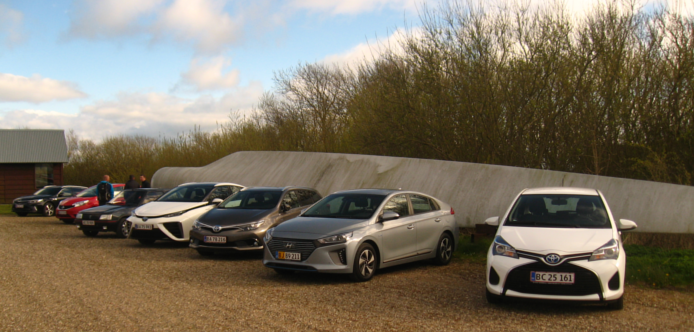
Transport is very important, which is why we have always supported new solutions: bio-fuels, electric and hydrogen mobility examples are all represented in Folkecenter. We believe that the correct answer is not one of them, but a good combination of all!
| Vehicle | Year | Description | |
|---|---|---|---|
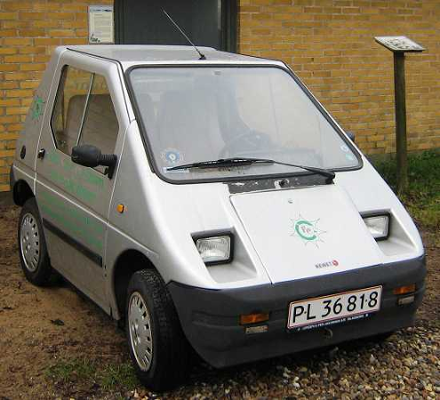 |
Kewett | ??? | One of the early examples of electric cars. The brand has now been purchased by a Norwegian company. |
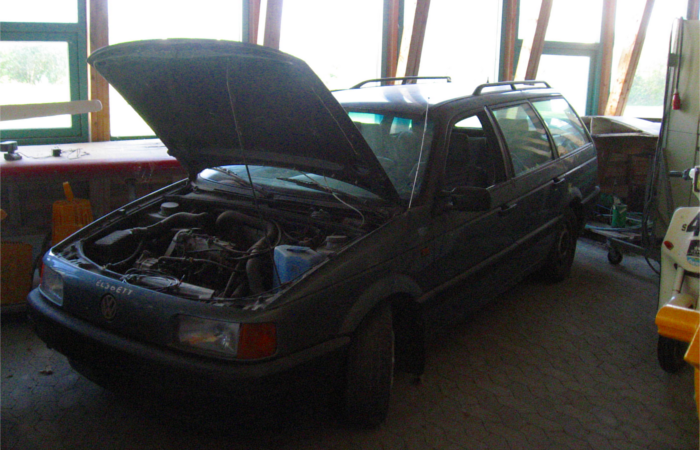 |
Volkswagen Passat | ??? | The car hosts an Elsbett engine designed to run specifically on Pure Plant Oil (PPO). The car could deliver an average of 28 km/L in real driving conditions, which is a quite outstanding result considering that few cars can reach that efficiency also nowadays. The engine is a 3-cylinder 1,5 L specificly designed for PPO operation and could deliver the same power of a 4-cylinder 2,0 L Mercedes diesel engine. A higher compression ratio, specificly designed pistons and a cooling system running on oil are just some of the features of this engine. The car ran hundreds of thousdands KM before being dismissed. |
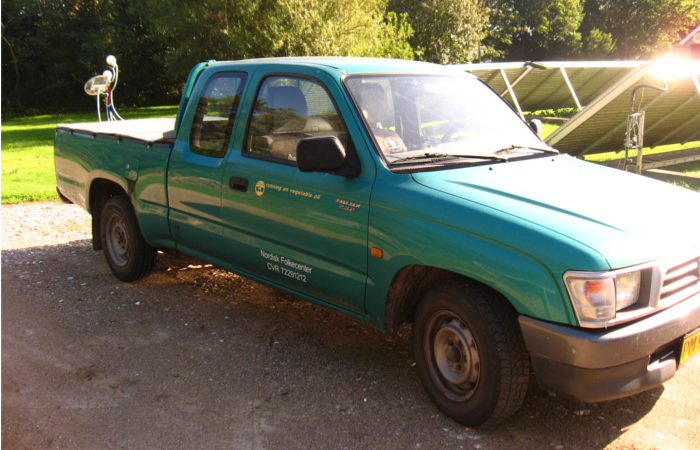 |
Toyota Hilux | ???? | The engine of the car was converted to allow driving either on Diesel or on Pure Plant Oil. The car runs like a conventional Diesel and the only difference is the more frequent service interval: oil and filters should be replaced at half the KM than conventional Diesel models. Furthermore, since PPO has more viscosity than Diesel, an additional battery and a heat exchanger were installed, to facilitate starting the engine in cold climates. |
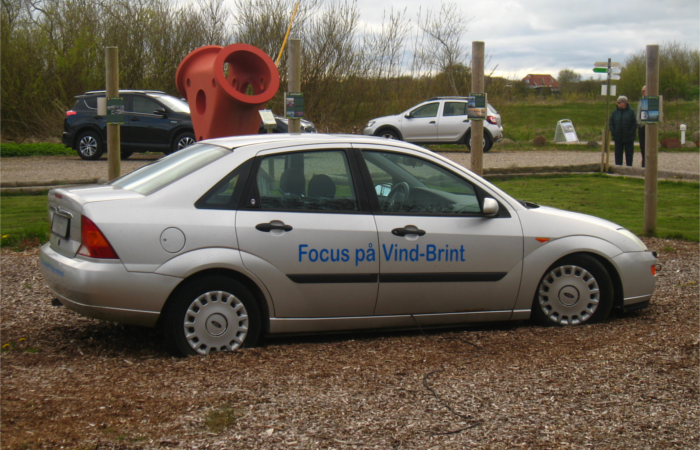 |
Ford Focus | ???? | Born as a gasoline car, it was converted so that it could run also on hydrogen. The vehicle is one of the few hydrogen combustion cars in Denmark and Folkecenter is the first place in Denmark where the whole chain of hydrogen was covered: wind energy produced electricity to power the electrolyzer, which produced the hydrogen needed to operate the car. The vehicle was born as intermediary solution to replace gasoline-powered engines: fuel cells were still too expensive, so the Focus was modified with the aim of developing a conversion kit which could increase the demand of hydrogen; more hydrogen demand would mean more filling stations installed and, consequently, more demand for fuel cells technology. The car was able to operate, even if only at 1/3 of its capacity: the drop in performance was due to the limited electronics available at that time to control the combusion of hydrogen. |
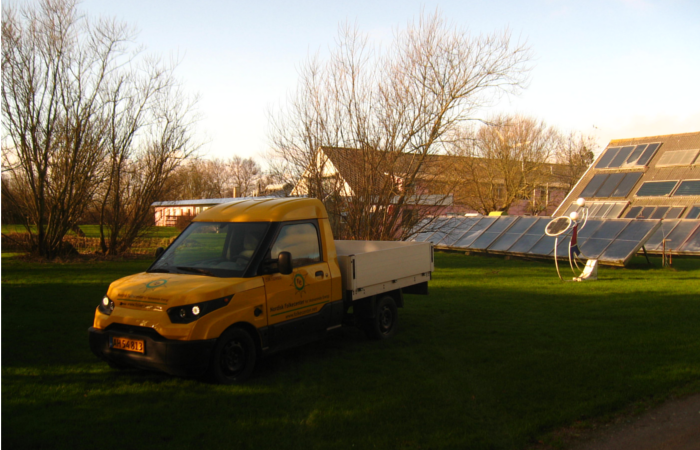 |
Streetscooter Work B14 | ???? | Originally designed for the German post, the Streetscooter is an electric van with an approximate range of 50 km and a top speed of 80 km/h. The van can accomodate two people and a total weight of 750 kg. Meant for short-distance trips, the Streetscooter can be charged with a conventional plug in 7-8 hours. |
| Nissan e-NV200 | 2019 | Powered by electricity, the Nissan e-NV200 was bought for servicing the "Test Station for Small Wind Turbines located in Hundborg and operated by Folkecenter. The van has a range of 300 km in the city and 200 km on mixed paths. Charging can occur both with AC (3 kW or 6,6 kW) and DC current (from 20% to 80% in less than one hour). Charging with the AC plugs require between 7 hours and 28 hours (6,6 kW and 3 kW charging respectively). The van is one of the few full-electric vehicles capable of pulling a trailer and it has also the capability to provide electricity to a building, thanks to the ChaDeMO plug. | |
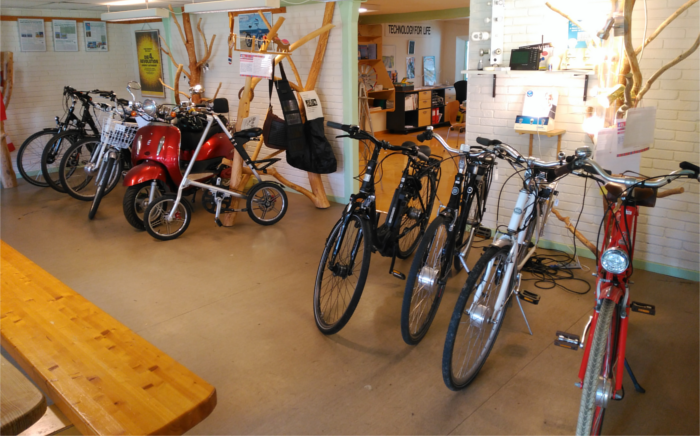 |
Bikes/Mopeds | Mixed | A large collection of 2- and 3-wheels electric bikes and mopeds, which can be tried by Folkecenter's visitors. An overview of the electric bikes and mopeds can be found in our E-mobility brochure, available here |
